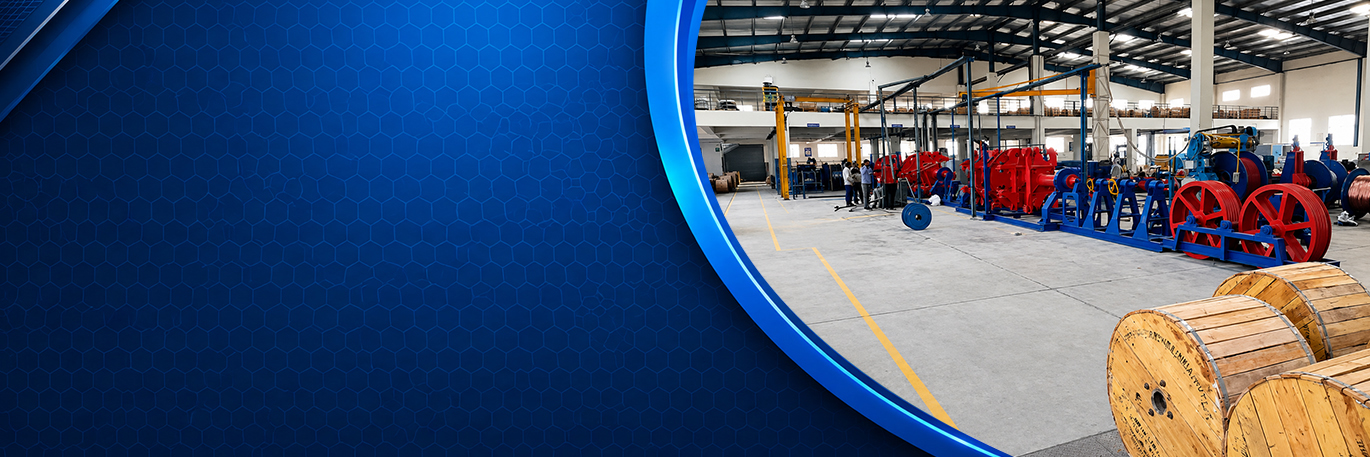
No two cable manufacturing lines are exactly alike. The right machine depends on several practical factors, including conductor material, wire diameter, cable construction, required production speed and the level of automation needed. We therefore look at the actual application before deciding on the machine configuration rather than treating every requirement as a standard one.
Cable Manufacturing Machines for Different Applications
Different cable constructions call for different manufacturing processes. A machine that works well for one type of cable may not be the right choice for another. This is why Akash Industries & Sons offers machinery for a variety of wire and cable production requirements.
- Rigid Stranding Machines
- Fork Type Rigid Stranders
- Disc Type Rigid Stranders
- Armouring Twisting Machines
- Cable Core Laying Machines
- Skip Twisting Machines
- High-Speed Bunching Machines
- Rewinding Machines
- Pay-Off and Take-Up Systems
- Other specialised cable machinery
Whether you are setting up a new production line or replacing machinery in an existing plant, it makes sense to start with the cable you actually manufacture. Factors such as wire tension, lay length and cable formation need to remain under control throughout production, and the machine configuration plays an important role in achieving that consistency.
Rigid Stranding Machines
Rigid stranders bring individual wires together to form stranded conductors. They can be configured for both copper and aluminium and adapted to different conductor constructions.
Depending on the application, machines can be designed for round, compact, shaped, spiral and pre-spiral conductors. They can also be configured for applications involving conductors such as ACSR and ASSR.
Depending on the production requirement, the machine may include multiple cages, individual wire tension control, AC drives and PLC/HMI-based controls. Bobbin arrangements and other operating parameters can also be selected according to the conductor being produced.
The key is to match the strander to the actual conductor specification. Wire diameter, number of wires, conductor construction and required output all influence the final machine configuration.
Armouring and Twisting Equipment
Armouring adds mechanical protection to a cable, making it an important step in the production of many cable types. Armouring twisting machines apply armour wires around the cable core while maintaining controlled movement and consistent formation.
The machine configuration depends on details such as armour wire diameter, cable diameter, number of armour wires and the production speed required.
For manufacturers producing several cable specifications, a flexible machine setup can also make production planning easier. Different requirements can be handled without making the production process unnecessarily complicated.
Cable Core Laying Machines
Cable core laying machines bring multiple insulated cores together and form them into the required cable construction.
This stage requires controlled tension and proper synchronisation between the different components. If these factors are not properly controlled, maintaining the desired cable geometry throughout production can become difficult.
The machine can be configured according to the number of cores, finished cable diameter, reel dimensions and required production output.
A well-matched laying system gives operators better control over cable formation and helps maintain consistent results across different production runs.
High-Speed Bunching and Rewinding Machines
Bunching machines are generally used when several fine wires need to be combined to form a flexible conductor. The wires need to move in a controlled manner and remain evenly distributed so that the finished conductor maintains its required construction.
Rewinding machines serve another purpose. They transfer wire or cable from one reel to another while maintaining suitable tension and winding quality.
This can be particularly useful when a production facility works with different reel sizes or needs to prepare material for another stage of manufacturing. A suitable rewinding arrangement can also simplify material handling on the shop floor.
Why Machine Configuration Matters
Two machines may look similar on paper, but that does not necessarily mean they will deliver the same results in a particular production environment. Cable construction, conductor specifications and production targets should be considered before finalising the equipment.
Some of the important factors include:
- Type of cable being manufactured
- Copper or aluminium conductor
- Wire or conductor diameter
- Number of strands or cores
- Required lay length
- Target production speed
- Bobbin or reel dimensions
- Available installation space
- Required level of automation
- Existing production-line configuration
Discussing these details with Cable Machinery Manufacturers before purchasing equipment can make machine selection much more straightforward. Rather than starting with a standard machine and trying to adapt it later, you can begin with the cable specification and identify the configuration that fits the process.
Choose Cable Machinery Based on Your Application
If you are expanding your production capacity, replacing older equipment or setting up a new cable manufacturing line, it helps to begin with your cable specification rather than searching for a machine by name alone.
When contacting us, you can share details such as:
- Type of cable or conductor being manufactured
- Conductor material — copper or aluminium
- Wire or conductor diameter
- Number of wires, strands or cores
- Required production speed
- Bobbin or reel size
- Cable diameter and construction
- Automation and control requirements
As experienced Cable Machinery Manufacturers, Akash Industries & Sons supplies equipment for different stages of cable production and helps manufacturers select machinery based on their actual production requirements.
Request a Cable Machinery Quote
Looking for cable manufacturing machinery for your production facility?
Share your cable construction, conductor specifications and production requirements with Akash Industries & Sons. Our team can discuss the relevant machine category and configuration for your application.
Frequently Asked Questions
The range includes rigid stranding machines, fork-type and disc-type rigid stranders, armouring twisting machines, cable core laying machines, skip twisting machines, high-speed bunching machines, rewinding machines and other cable production equipment.
Start with the cable you intend to manufacture. Important factors include cable type, conductor material, wire diameter, number of strands or cores, lay length, production speed, reel dimensions, automation requirements and available floor space.
Yes. Several machine types can be configured for copper and aluminium applications. The suitable setup depends on the conductor design, wire size and manufacturing process.
A rigid stranding machine combines individual wires to form a stranded conductor. Depending on its configuration, it can be used for round, compact, shaped and other conductor constructions.
An armouring machine applies armour wires around a cable core. The armour layer provides additional mechanical protection to the cable.
A cable core laying machine brings multiple insulated cores together and lays them into the required cable formation. Controlled tension and synchronisation help maintain the desired cable geometry during production.
Yes. Sharing details such as conductor material, wire diameter, number of strands or cores, cable diameter, production speed and reel dimensions makes it easier to assess the appropriate machine configuration.
You can contact Akash Industries & Sons by phone or email and share your cable construction and production requirements. The team can then discuss the relevant machinery and configuration for your application.